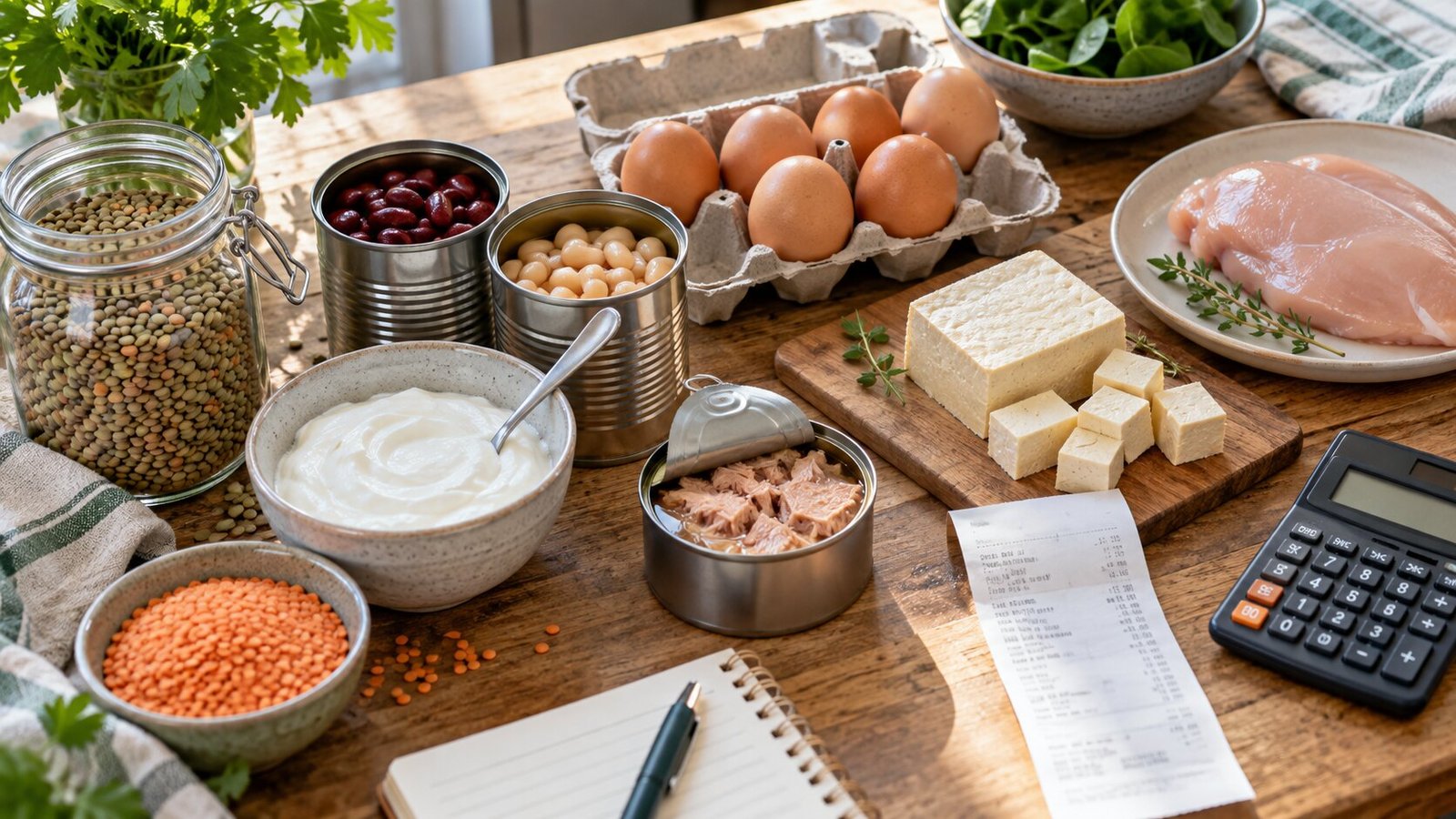
The cheapest package is not always the cheapest protein. Compare foods using cost per 30 grams of protein: package price ÷ total protein in the package × 30. Beans and lentils often score well, but sales, waste, preparation and the Nutrition Facts table can change the result.
Protein became one of Canada’s biggest searches this week, and grocery marketing is ready for it. The word now appears on cereal, chips, bars, drinks and desserts—often beside a premium price. Before paying extra, reduce every product to the same question: how much does 30 grams of protein actually cost?
A comparison unit, not a universal serving recommendation. It lets unlike packages compete on one simple measure.
Calculate the price of 30 grams of protein
The default numbers are only a worked example. Replace all four fields with the label and shelf price in front of you.
The formula grocery labels do not show
Suppose a 900-gram package costs $5.40. The Nutrition Facts table lists a 50-gram serving with 12 grams of protein. The package contains 18 servings, or 216 grams of protein. Divide $5.40 by 216 and multiply by 30. The result is $0.75 per 30 grams of protein.
That single calculation makes a flashy “20 g protein” claim less persuasive when a smaller, cheaper staple delivers the same amount for less.
Foods worth comparing first
| Food | Where value often appears | Check before buying |
|---|---|---|
| Dried lentils and beans | Low package cost, long shelf life and fibre | Cooking time and realistic cooked yield |
| Canned beans | Convenience and almost no preparation waste | Drained weight and sodium |
| Eggs | Easy portions and versatile meals | Price per dozen and protein per egg |
| Plain Greek yogurt | High protein in a ready-to-eat food | Container size, added sugar and spoilage |
| Canned tuna or salmon | High protein per serving and pantry storage | Drained weight, sodium and recommended variety |
| Tofu | Competitive plant protein and little waste | Protein varies by firmness and brand |
| Chicken | Strong protein density, especially on sale | Bone, skin, cooking loss and freezer space |
| Protein powder | Convenient and easy to calculate | Serving count, ingredients and premium pricing |
There is no permanent winner. A sale can move chicken ahead of yogurt. A large container becomes expensive if half spoils. Dried beans can be excellent value but inconvenient on a rushed week. Cost per 30 grams is a starting line, not the entire meal plan.
The protein premium can hide in plain sight
Products marketed as “high protein” can charge more for a small increase. Compare the ordinary and protein-labelled versions using the calculator. If the premium product costs $2 more but adds only 10 grams of protein to the package, you are paying $6 for each extra 30 grams.
Most Canadians eating a mixed diet already get enough protein, according to Health Canada. Paying a premium makes sense only if the product solves a real nutrition, convenience or dietary need.
Price is not the only column
A cheap protein score does not automatically make a food the healthiest choice for every person. Compare sodium, saturated fat, added sugars, fibre and ingredients. Allergies, kidney disease, pregnancy, sport training and other health considerations can require individualized advice.
Health Canada encourages Canadians to choose plant-based protein foods more often and specifically identifies beans, lentils and other legumes as inexpensive protein foods. That is useful guidance—but it does not require abandoning foods your household will actually prepare and eat.
A practical five-item shopping test
- Pick five proteins your household already eats. Do not begin with aspirational food that may be wasted.
- Record the real shelf price. Include the package size and sale conditions.
- Use the Nutrition Facts table. Enter serving size and protein per serving.
- Circle the best two values. Choose one convenient option and one pantry or freezer staple.
- Repeat when prices change. Save the result in your phone rather than trusting a marketing claim.
The grocery aisle has turned protein into a status word. Treat it like any other unit price. A calculator cannot cook dinner, but it can stop a health halo from quietly doubling the bill.
Common questions
Is 30 grams the amount everyone should eat at every meal?
No. It is simply a useful comparison amount. Individual protein needs vary with age, body size, activity and health.
Should I compare dry or cooked weights?
Follow the package’s Nutrition Facts table consistently. Water gained or lost in cooking can make a mixed calculation misleading.
Are plant-based proteins always cheaper?
Beans and lentils are often inexpensive, but package format, brand, location, preparation and waste all matter. Calculate the product you are actually considering.
Continue with a related guide
- Canada Groceries and Essentials Benefit guide
- What two Lotto 6/49 plays a week can cost over time
- Browse every Matelacom Money guide
Official sources
- Health Canada: healthy eating on a budget
- Health Canada: protein and grocery-shopping guidance
- Health Canada: Canadian Nutrient File

This guide was reviewed and approved by Matelacom Inc. We turn official Canadian information into clear examples and practical next steps. Corrections: info@matelacom.ca.
This article and calculator provide general educational information, not medical or individualized nutrition advice. Nutrition labels and individual needs vary. Speak with a qualified health professional about personal dietary requirements.