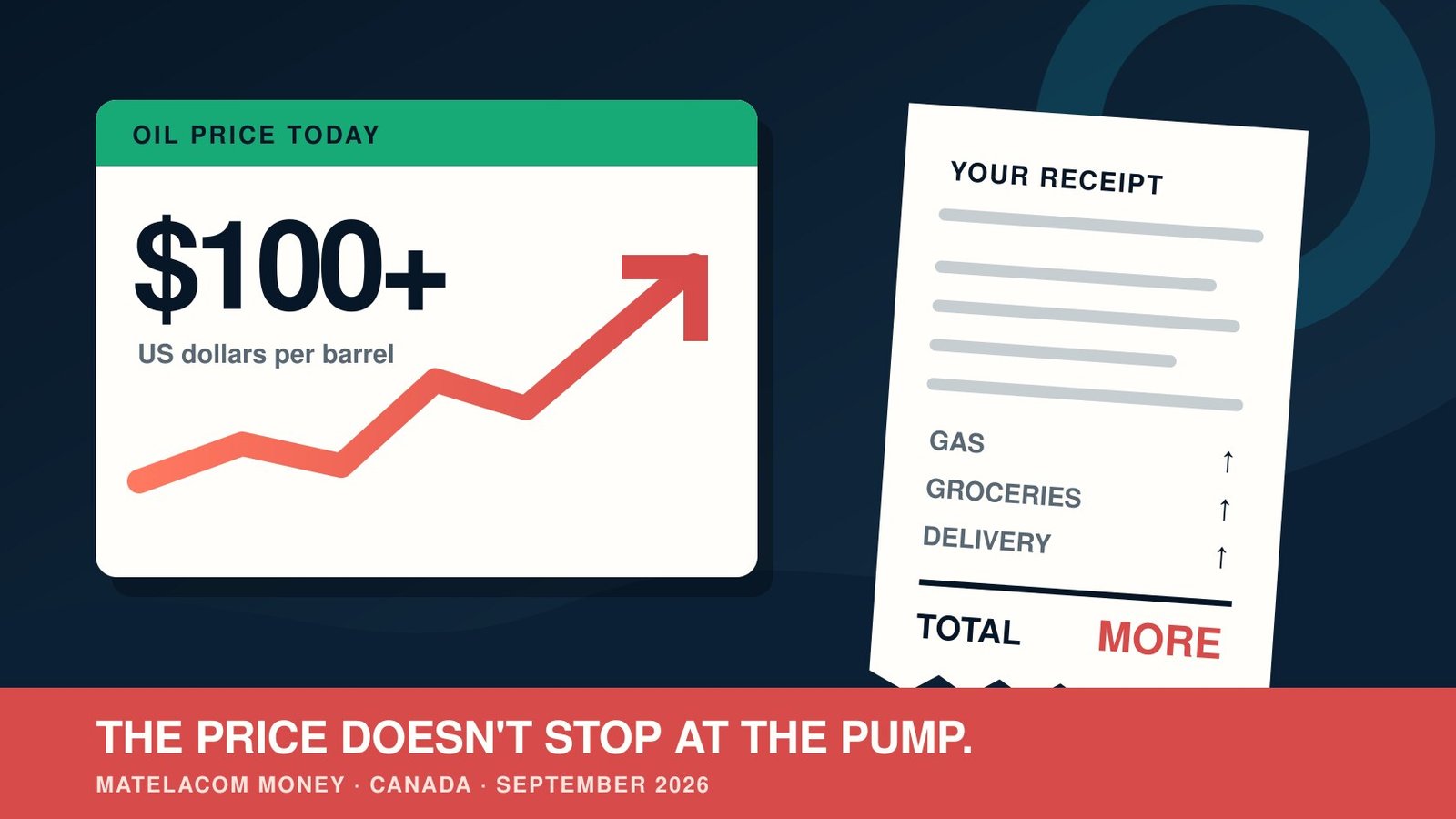
Brent crude topped US$100 a barrel on September 9 for the first time in six weeks and was roughly 25% higher than in early August. If that level persists, the direct risk is higher fuel costs. The second-round risk is more expensive transport and production, renewed inflation pressure and less room for lower interest rates.
Here we go again. A barrel of oil crosses a psychological line, markets flash red, and Canadians are told the country should somehow feel richer because it produces oil. That may help exporters, producers and government revenue. It does not make the number on a gas pump less real for the person driving to work.
The ugly part of an oil shock is how efficiently it finds a household budget. It starts with gasoline and diesel. Then it rides along in trucking, delivery, packaging, manufacturing and air travel. If it lasts, it can also complicate the Bank of Canada’s inflation fight. The price of oil does not stay in the energy column; it leaks.
Brent crude on September 9, 2026. Reuters reported that the benchmark had climbed by about one quarter since early August amid renewed supply concerns.
The first bill shows up at the pump
Anyone searching for gas prices in Canada wants a clean conversion: oil rises by this much, gasoline rises by that much. Unfortunately, the retail price is not that tidy. Crude oil is a major input, but refining margins, the Canadian dollar, distribution, taxes and local competition also matter. A one-day oil spike is not a one-day forecast for the sign at your station.
Still, a sustained jump in crude raises the floor under the system. Natural Resources Canada calls rising crude prices the single most important factor behind increases in petroleum-product prices, even though crude represents only part of the final pump price.
The household math is brutally simple. A 10-cent-per-litre increase adds $5 to a 50-litre fill-up. Use 150 litres in a month and that is another $15. At 20 cents, double it. That will not bankrupt most households by itself. The problem is that it rarely arrives by itself.
Then it gets buried in groceries and deliveries
Canadian grocery prices were already rising faster than overall inflation before this latest oil move. Statistics Canada’s July data put food purchased from stores up 3.1% year over year, while the all-items Consumer Price Index was up 3.0%.
Oil does not mechanically add the same percentage to every product. But fuel and energy sit inside a long list of costs: farm equipment, fertilizer production, refrigerated trucks, warehouses, packaging and the final trip to the store. Businesses may absorb some of that pressure, pass some through, or add a fuel surcharge. Either way, the consumer is the last stop on the route.
This is why the phrase “core inflation” can feel insulting at the kitchen table. A category may be volatile in an economist’s model, but the household still has to buy the tank of gas and the bag of groceries this week.
The hidden punch is the path of interest rates
In July, the Bank of Canada’s outlook assumed oil prices and gasoline-refining margins would decline, helping inflation ease. Oil returning above US$100 pushes in the opposite direction. Reuters noted that a sustained period above that level could lift transportation and manufacturing costs, reignite inflation fears and keep interest rates higher for longer.
That does not guarantee another Bank of Canada rate increase, and it does not set Canadian mortgage rates on its own. It does mean the case for quick, easy rate relief becomes less comfortable. Fixed mortgage rates also react to bond markets, which can move before the Bank changes its overnight rate.
Our inference: if oil remains elevated for weeks rather than days, borrowers renewing a mortgage should be more cautious about building a budget around an assumed near-term rate cut.
Why the Dow Jones and your grocery receipt moved into the same story
Stock indexes fell as investors weighed the oil shock, renewed inflation pressure and geopolitical risk. That market reaction is not just trader drama. Long-term borrowing costs can rise when investors demand more compensation for inflation and uncertainty. The chain from oil price to the Dow Jones to a Canadian mortgage quote is indirect—but it is not imaginary.
Canadians have every right to be angry about another supposedly temporary shock landing on the same exhausted household budget. But anger is most useful when it is aimed accurately. Oil above US$100 is a warning, not proof that every retailer is gouging and not a guarantee that every price jumps tomorrow. Watch what actually changes, keep receipts and compare before accepting a “fuel costs” excuse at face value.
Four moves that are worth making now
- Add a 30-day fuel buffer. Multiply your monthly litres by 10 cents and 20 cents. Put both numbers in the budget now so a price jump is annoying rather than surprising.
- Compare the full trip, not just the sign. Driving across town to save two cents a litre can burn the savings. Combine errands and compare stations already on your route.
- Challenge new surcharges. If a delivery or service company blames fuel, ask whether the fee is temporary, how it is calculated and when it will be removed.
- Do not bet a renewal on a rate cut. If your mortgage renews within six months, collect comparable fixed and variable quotes now. Treat a future cut as upside, not as the only way the payment works.
For housing-budget pressure beyond the mortgage payment, open the Ontario Home Cost Calculator. For the rest of the free calculators, visit Matelacom Tools.
Sources and methodology
- Reuters: Brent oil tops US$100 as supply fears intensify (September 9, 2026)
- Statistics Canada: Food Price Data Hub and July 2026 CPI data
- Bank of Canada: July 2026 Monetary Policy Report
- Natural Resources Canada: Why gasoline prices go up and down

We turn current Canadian money news into plain-language implications, practical checks and clearly labelled opinion. Corrections: info@matelacom.ca.
This article provides general educational information and editorial analysis, not personal financial or investment advice. Oil, fuel, inflation and interest rates can change quickly. Verify current prices and contract terms before acting.