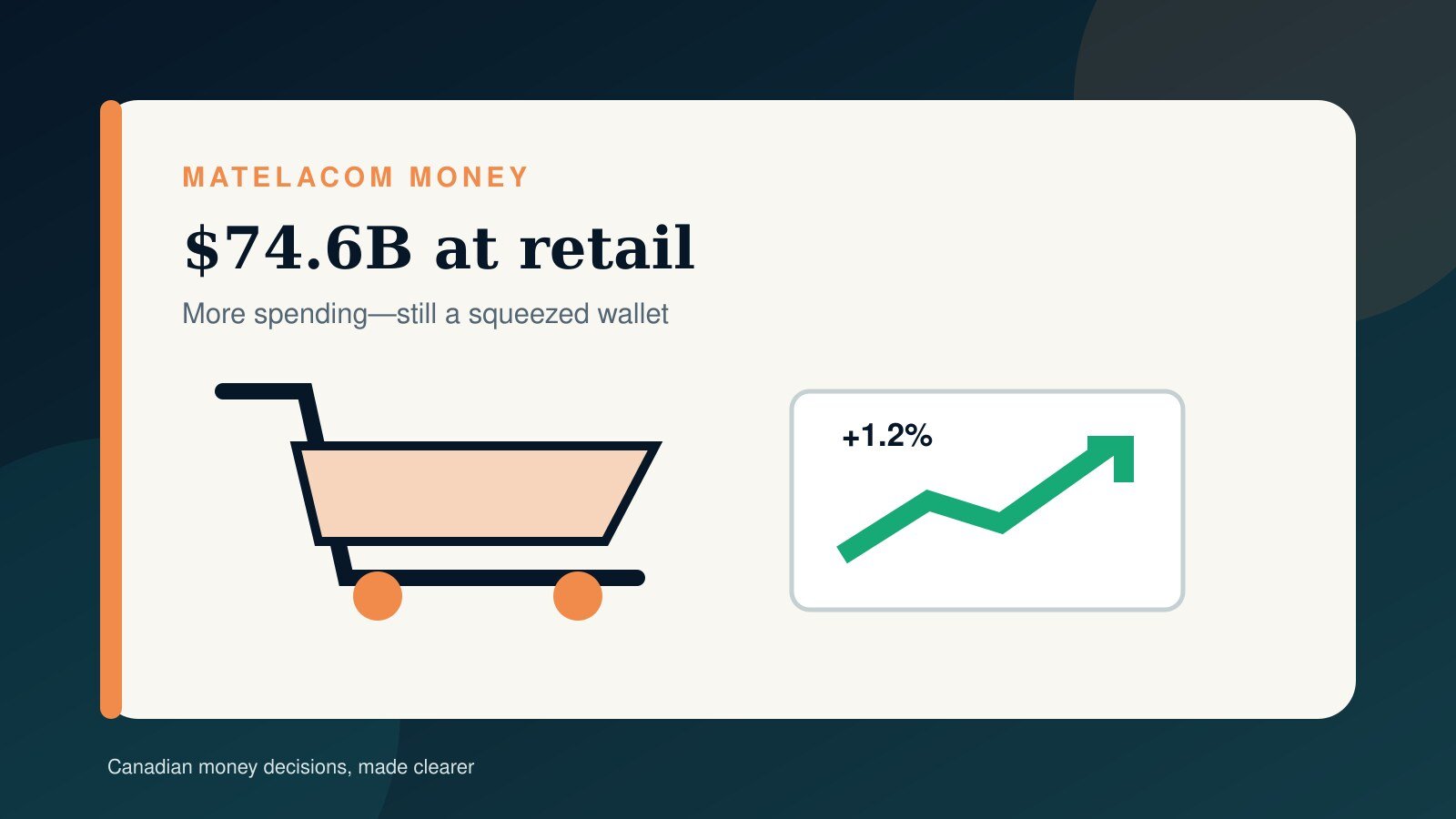
Canadian retail sales rose 1.2% to $74.6 billion in August. Sales volumes also rose 1.2%, meaning the increase was not only higher prices.
Canadians spent more in August, but this is not proof that household budgets suddenly feel comfortable. The strongest national report in months still sits beside elevated prices and cautious spending plans.
Seasonally adjusted Canadian retail sales in August 2026.
Ontario led the dollar increase
| Measure | August result |
|---|---|
| Canada retail sales | +1.2% |
| Retail sales volume | +1.2% |
| Core retail sales | +1.1% |
| Ontario retail sales | +2.2% |
| Toronto retail sales | +4.0% |
| E-commerce sales | $5.6 billion |
Statistics Canada reported gains across all nine subsectors. Motor vehicle and parts dealers led the increase. Food and beverage retailers rose 1.1%, while health and personal-care retailers recorded a tenth consecutive monthly gain.
The fuel number needs context
Sales at gasoline stations and fuel vendors rose 1.7% in dollars, but fell 0.5% in volume. That split is a useful reminder: spending more at the pump does not always mean buying more fuel.
What this means for a household budget
- Do not treat national spending as permission to overspend. Your cash flow matters more than an aggregate report.
- Separate price increases from quantity. Compare grocery units, fuel litres and recurring bills—not only totals.
- Watch the September revision. The early estimate points to another 0.7% increase, but Statistics Canada labels it unofficial and subject to revision.
The report says spending rebounded. It does not say the affordability problem disappeared.
Official source
Keep reading
Why 3.1% inflation still hurts · Canada lost 110,000 jobs over two months

This page was reviewed and approved for publication by Matelacom Inc. Confirmed figures link to primary sources; analysis and estimates are labelled. Corrections: info@matelacom.ca.
This article is for general educational purposes only and is not personalized financial, tax, legal, employment or real-estate advice. Figures and program details can change after publication; confirm decisions with the linked official source and a qualified professional where appropriate.